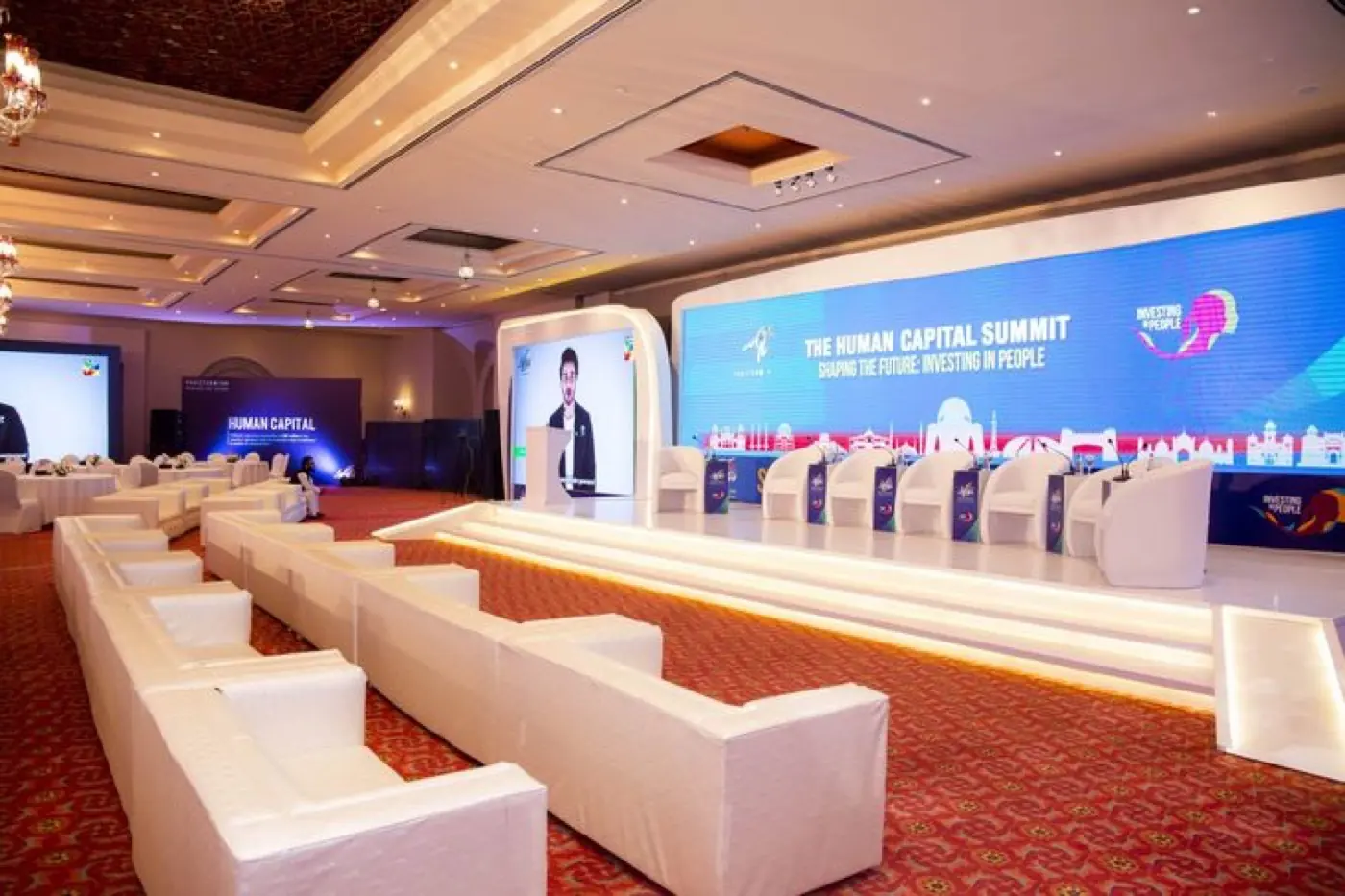
Most corporate events don't fail because the décor was wrong. They fail because nobody decided what the event was actually for, and by the time 300 people are in the room, it's too late to fix.
This is how we plan corporate events at Raw Group, and what we'd tell you to get right whether you hire us or not.
Decide what the event is for before anything else
"We need an annual day in December" is a date, not an objective.
An event built to motivate a sales team looks nothing like one built to impress distributors. The first needs interaction, recognition and room to move. The second needs a controlled room, a strong stage and a message that lands in the first ten minutes.
Write one sentence: this event has worked if ______. Everything after that, venue, run of show, budget, entertainment, is a decision you make against that sentence.
If you can't finish that sentence, you're not ready to book a venue yet.
Build the budget backwards
The usual mistake is picking a venue first and discovering there's nothing left for production.
Work the other way. Start from your objective, decide what has to be excellent, then let everything else be adequate. A product launch that lives or dies on the reveal should spend on the stage, screens and lighting, not on an extra cuisine at dinner. A dealer meet where relationships matter can run in a simpler room with far better food.
Corporate event management with us starts from around ₹50,000 and scales with the size and complexity of what you need. But the number that matters isn't the total. It's how it's split.
Visit the venue. Always.
Floor plans lie. Photos lie more.
We do a site recce for every event, whatever the budget, because the things that break an event are the things you can only see in person: a loading bay too narrow for the LED wall, a low ceiling that kills your truss height, one power point for the entire stage, a pillar that blocks a third of the room's view.
When we walk a venue we're checking:
- Where guests enter, and where the queue will form
- Ceiling height and rigging points
- Available power and the distance to it
- Loading access and how long a set-up will actually take
- Sightlines from the worst seat, not the best one
- Where the caterer works, and how far that is from the guests
An hour on site saves a very expensive surprise later.
Design the run of show, not just the schedule
A schedule is a list of times. A run of show is what happens in the gaps.
Guests arriving over 40 minutes need something to do. A speaker finishing eight minutes early leaves a hole. The gap between dinner being announced and dinner being ready is where an event loses its energy.
A workable corporate flow usually looks like:
- Arrival and registration, with something to occupy early guests
- A short, confident opening that sets the tone
- The main content, broken up before attention drops
- Recognition or the reveal, the moment people will remember
- Entertainment that fits the audience, not the budget line
- Dinner and networking, with a clear end
Time every transition. Most events feel disorganised in the joins, not the segments.
Get the AV right. It's where events break
More corporate events are ruined by sound than by anything else. A speaker who can't be heard at the back undoes a lakh of décor.
Match the equipment to the room and the content: screen size to viewing distance, speaker count to room shape, microphone type to how people will actually move. Insist on a technical rehearsal with the real deck on the real screen, not a promise that it'll be fine.
If anything is being live-streamed or recorded, that changes the lighting and audio requirements. Decide before the room is designed.
Brand the room without shouting
There's a version of corporate branding where the logo appears fourteen times and nobody reads any of them.
Put the brand where attention already is, the stage, the screen, the entrance, the photo wall people will actually stand at. Keep signage functional and legible. Match the presentation template to the room so the screen doesn't fight the set.
The goal is that photographs from the event look unmistakably like your company. Not that the room is covered.
The first ten minutes set the tone
Guests form their opinion in the queue, not during the keynote.
Pre-register wherever you can. Staff the desk for the peak, not the average. Have someone who knows the seating plan standing where confused people arrive. Signpost the route from the car park, because that's where the day actually starts.
For senior guests, assign a specific person, not "the team", to receive them.
Decide who is actually running it
This is the difference between hiring vendors and running an event.
On the day, someone has to hold the venue, décor, AV, stage, branding, catering, entertainment, speakers, guests, photography and the clock in one head, and make decisions quickly when two of them collide.
We put a dedicated manager and coordinators on every event, scaled to its size, so that person is never the client. Our team has run corporate events up to 1,200 attendees, along with 10+ company inaugurations and 8+ product launches for 20+ IT companies and 15+ MNCs, including government, Air Force and Defence assignments where the margin for error is smaller.
If your answer to "who's running this on the day?" is a vendor's phone number, you don't have an event manager. You have suppliers.
Plan for the thing that goes wrong
Something will. A speaker's flight slips, a laptop won't output, rain arrives an hour early, a delivery is late.
What matters is whether it reaches the guests. That means knowing in advance who decides, having the backup already in the room rather than a promise it can be arranged, and briefing the anchor on how to hold a room for ten unplanned minutes.
Our approach is simple: take ownership, fix it quietly, keep the event moving. The client should hear about most problems afterwards, not during.
A last check before doors open
Walk the room as a guest would. Sit in the back row. Read the screen from there. Listen to the sound from the corner. Check the route from the entrance to the seat. Confirm the first three items on the run of show with the people responsible for them.
Most last-minute disasters are visible thirty minutes earlier to anyone actually looking.
What we manage
Corporate meetings, conferences and seminars, product launches, company inaugurations, team-building and employee engagement, trade shows and exhibitions, award nights, annual days, dealer and distributor meets, brand activations, and government and institutional events, across Hyderabad, Vijayawada and Guntur.
Planning a corporate event?
Tell us the objective, the audience and the budget. We'll come back with a plan and a quote, usually the same day.