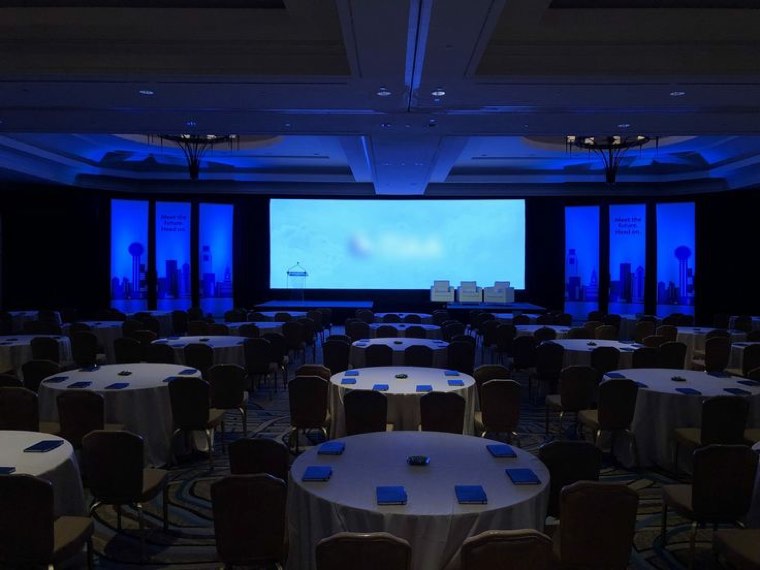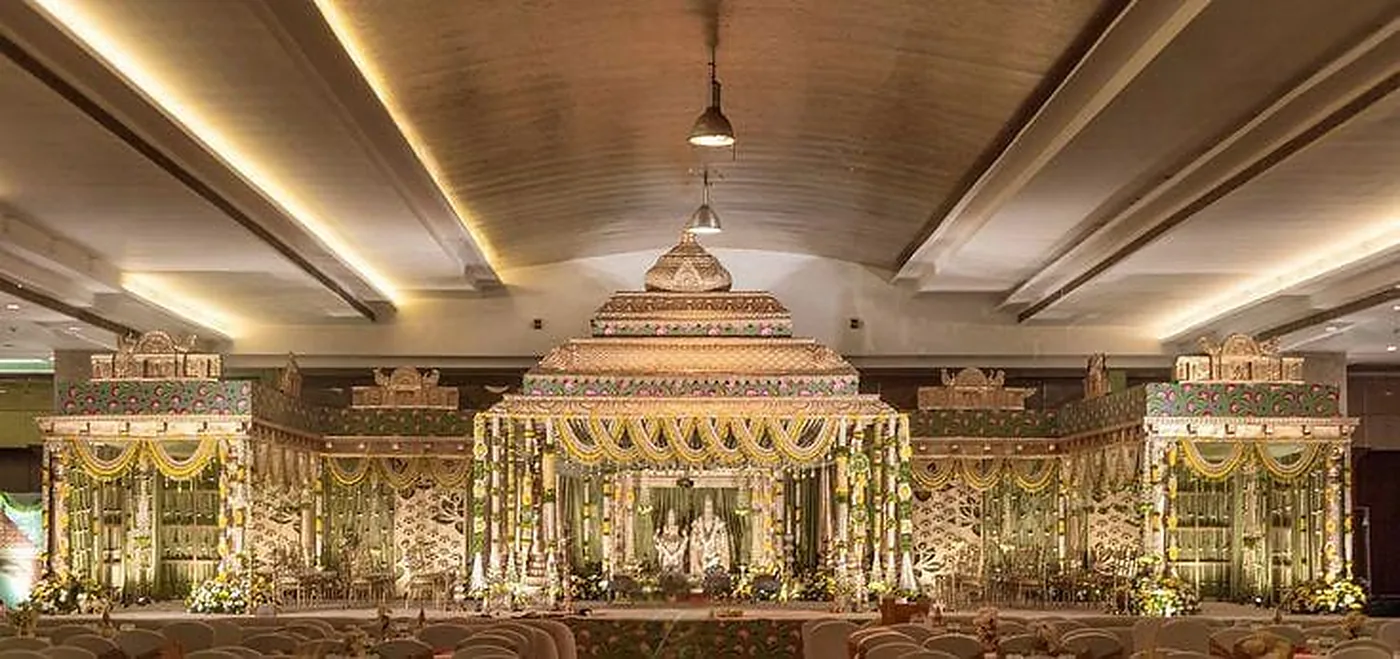
Most wedding décor conversations start in the wrong place. Someone opens a folder of saved photographs, points at a stage, and asks what it costs. The honest answer is that the same stage costs different amounts and looks completely different depending on the room you put it in.
Décor is usually the largest single line in a wedding budget. It is also the one where the venue, not the catalogue, should be making the decisions.
1. Read the venue before you choose a theme
Walk the space and look at what is already there: ceiling height, wall finishes, flooring, the entrance, where daylight falls, where the power points are.
Some venues arrive with a strong identity. A heritage space with carved stone, or a hall with a worked ceiling, is already saying something, and burying it under structure wastes both the venue and your money. Other spaces are deliberately blank and need you to build the entire visual world.
Open lawns, banquet halls, convention centres, farmhouses and hotel ballrooms are five different design problems. This is why we do a site recce for every wedding regardless of budget, before anything is drawn or priced.
2. Let each function look like itself
A wedding is not one design repeated. Haldi, mehendi, sangeet, the ceremony and the reception have different moods, different times of day and often different guests.
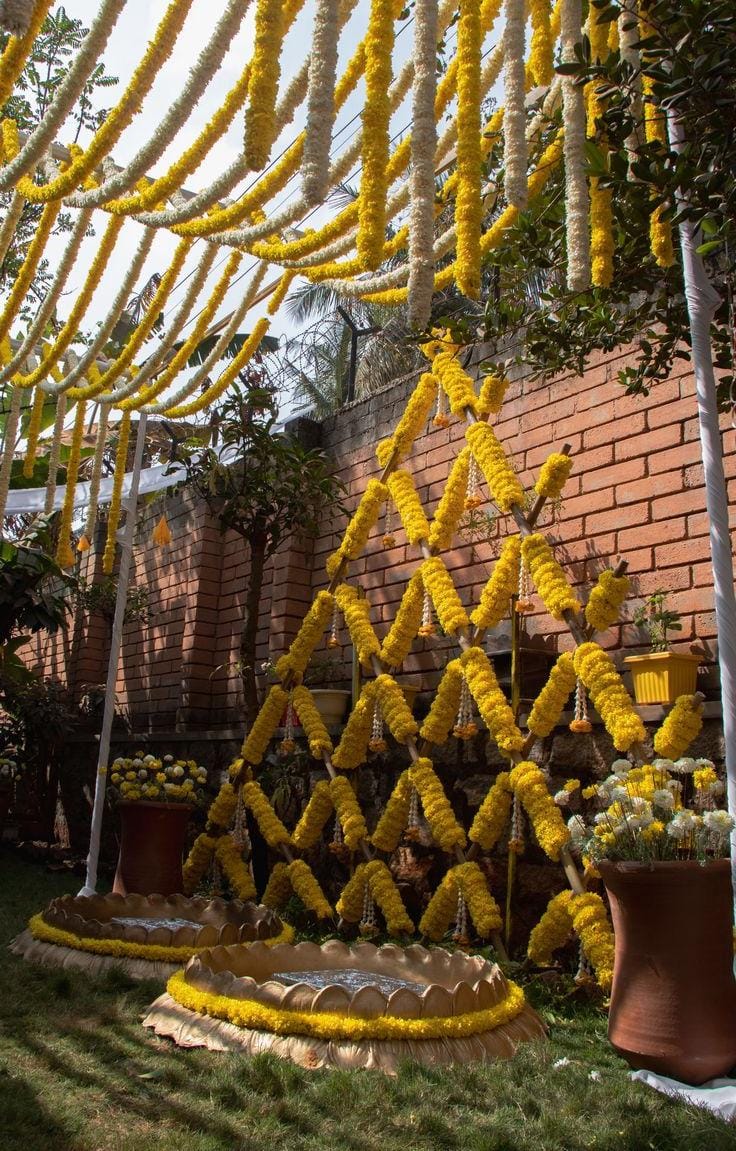
- Haldi — bright and informal, built to be touched and sat in. Marigold, yellows, terracotta, daylight.
- Mehendi — colourful and relaxed, with comfortable seating, because guests stay put for hours.
- Sangeet — stage-led and production-driven, closer to a show than a ceremony.
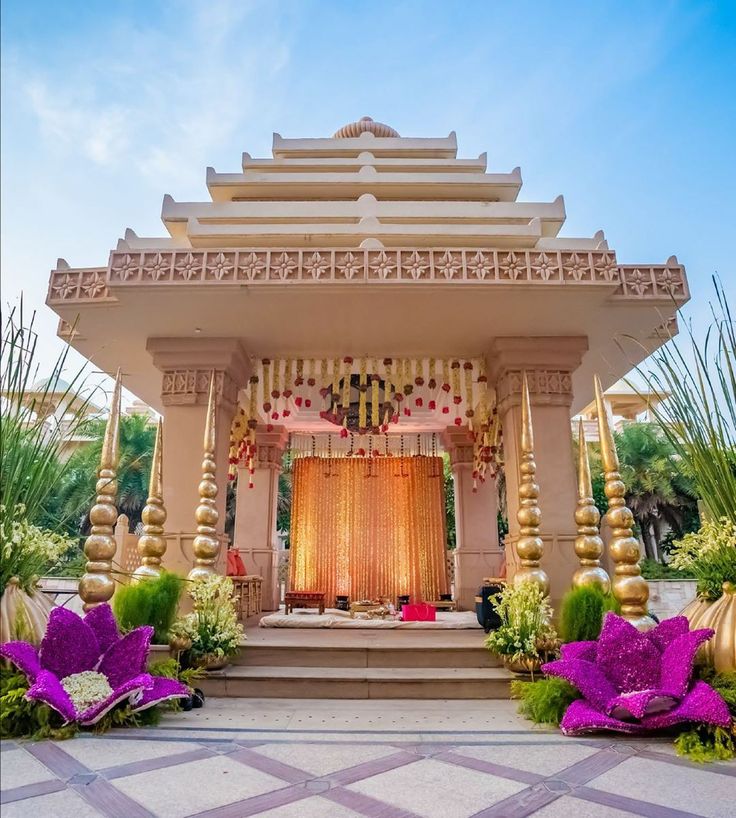
- Ceremony — the mandap is the centre of attention and everything else supports it.
- Reception — elegant and photograph-led, because this is where the queue forms.
What holds them together is a shared colour language and a consistent level of finish, not identical structures.
3. Get the proportions right
This is where most décor goes wrong, and it is rarely about money.
A stage that would dominate a farmhouse lawn disappears in a convention hall with a nine-metre ceiling. The reverse is worse: a large structure in a small room leaves guests edging around it all evening.
Measure the stage against the room, not against the photograph you liked.
Stage width, entrance treatment, seating, dining and photo areas all compete for the same floor. Decide the hierarchy early: what should guests see first, and what can be quieter.
4. Choose a palette, then hold it
Pick a primary palette and let flowers, fabric, furniture, lighting and stationery follow it. Three colours done properly reads as considered; seven reads as unfinished.
Bring the outfits into this conversation early. The couple and the immediate family are in every photograph, and a backdrop that fights a heavily worked lehenga will lose. The décor should frame the people, not compete with them.
5. Plan lighting with the design, not after it
Lighting changes a venue more than any single structure, and it is the thing most often added at the end, when the budget is already spent.
Think about it in layers: the stage, the ambient wash across the room, entrances and pathways, table lighting, and the light your photographer needs. An outdoor function that starts in daylight and runs into the evening is really two designs, and it needs planning as such.
6. Design for the camera as well as the room
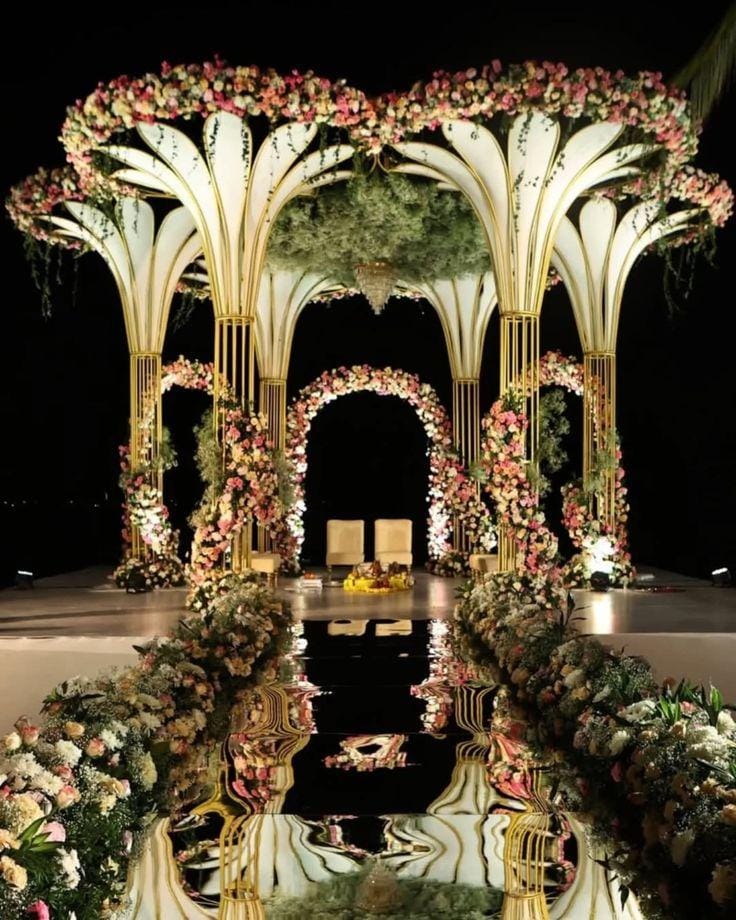
A setup that looks right from the third row can photograph badly. Backlighting the stage throws the couple into silhouette; a backdrop set too close behind them flattens everything.
Worth agreeing with the photography team before build: camera positions, stage depth, where the couple sit, what appears behind them, and whether the background stays clean once 400 guests arrive. Our photography and event teams work this out together, which is easier when they are on the same project.
7. Leave room for people to move
A design can be beautiful and still make an evening uncomfortable. Entrances, dining routes, service access for catering staff and emergency exits all have to survive the build.
Guests notice flow more than they notice detail. Nobody remembers the flower variety on the entrance arch; everybody remembers queuing because the buffet route was half a metre too narrow.
8. Build the décor around the budget, honestly
You do not need a luxury setup to get a beautiful wedding. You need material choices matched to what actually gets seen.
Fresh flower at eye level and at the entrance earns its cost. Fresh flower nine metres up, where no guest and no camera will resolve it, mostly does not. Structure, fabric and lighting carry scale far more efficiently.
Wedding event management with us starts from approximately ₹2 lakhs, and a good part of that first conversation is spent saying where to spend and where nobody will notice the difference.
9. Use references as a brief, not a blueprint
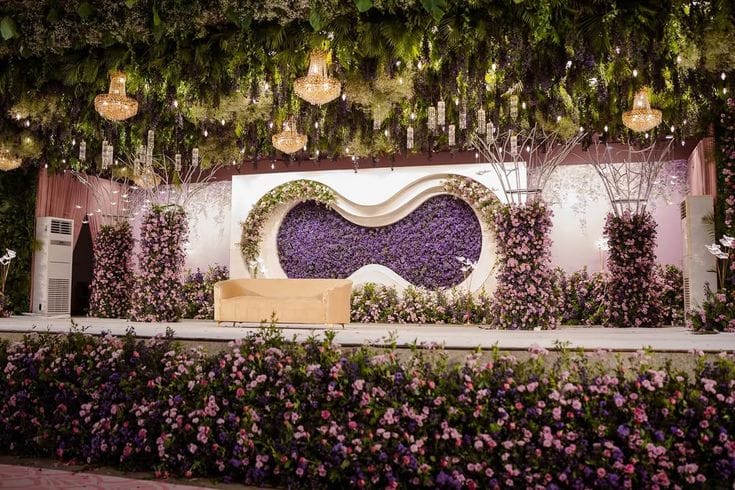
Saved photographs are genuinely useful. They tell a designer what you respond to far faster than adjectives do.
The mistake is asking for the photograph itself. It was built for another venue, another ceiling height, another guest count and another budget, and reproducing it in your room usually produces something that is recognisably a copy and recognisably worse. Bring five references and let a designer work out what you actually like about them.
10. Do a final technical check
Before build week, confirm stage dimensions, entrance clearances, power load and points, loading access and timings, furniture counts, lighting positions and every venue restriction in writing. Ceiling rigging and open flame are the two that most often get refused late.
Questions worth asking any décor team
These separate a designer from a supplier faster than a portfolio does.
- Will you visit the venue before designing?
- How will this design be adapted to my venue specifically?
- What materials are included, and how much of it is fresh flower?
- Is lighting included, and which layers?
- Are setup and dismantling included, and how long does each take?
- How will guest movement be maintained?
- What happens if we change venue after approval?
- Can this be adjusted to my budget, and how?
Our experience
Raw Group is a new firm, but the team behind it brings 8+ years and 1,000+ events, including weddings up to 10,000 guests and a six-day wedding with multiple functions each day.
We work across Hyderabad, Vijayawada and Guntur, and we design around your venue, your functions and your budget rather than handing you an album to choose from.
Planning a wedding?
Tell us your venue, dates and guest count and we will come back with a décor concept and a proper quotation, usually the same day.